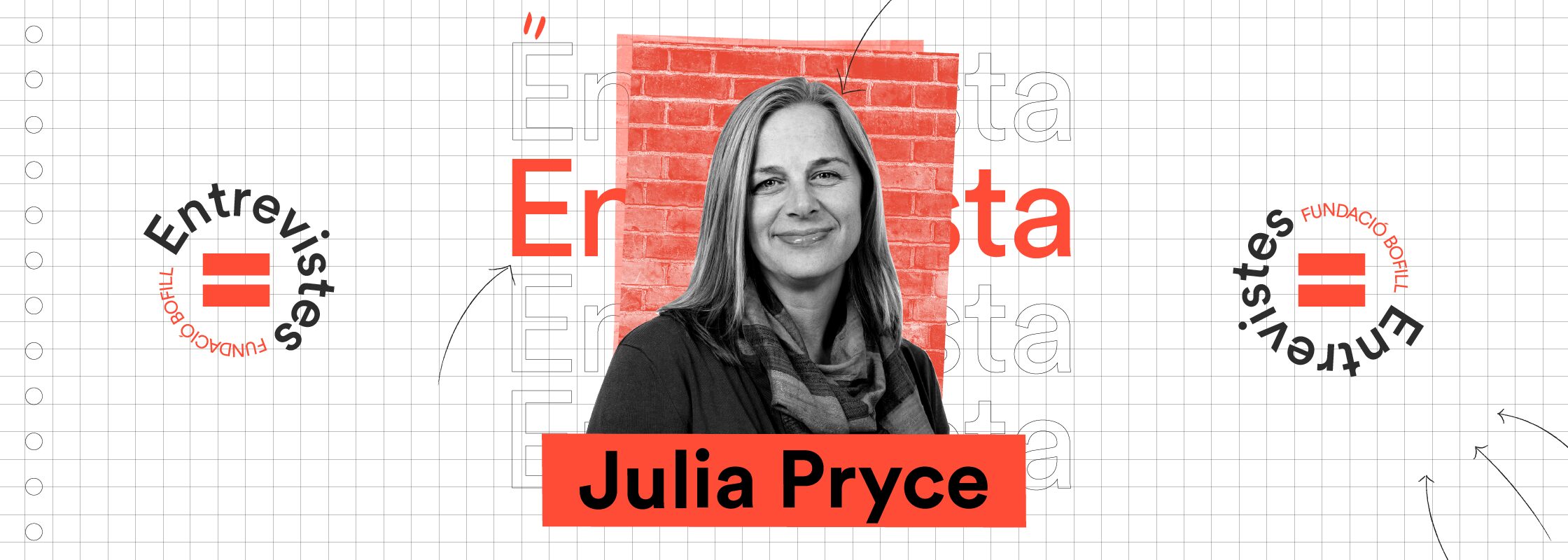
Interview with Dr. Julia Pryce on the power of mentoring relationships
Dr. Julia Pryce, Professor at Loyola University Chicago, has devoted her career to studying the power of mentoring relationships in the lives of young people. Her research focuses on the role of non-parental adults, the importance of attunement in mentoring relationships, and the structures that make youth programs effective. Her work highlights how access to trusted adults can make a profound difference in the well-being and development of children and adolescents.
In this interview, she shares her perspective on what is needed for mentoring to have real impact, the challenges schools face in responding to the diverse needs of their students, and the role adults can play as meaningful figures of reference for young people.
JP: I usually describe myself as a researcher, but I really identify as a social worker. At the core of my work is this ongoing conversation between research and practice. A lot of my questions come from observing practitioners and trying to learn from what they’re already doing. I take those lessons and study them more systematically through research, and then I try to bring what we learn back into practice. It’s important that research is nourished by practice. In my experience, practitioners have many strong ideas and practices, and the challenge for those of us in academia is to capture those ideas and bring them to light in a more structured way.
“When we move away from the instinct to fix and start listening to young people, we connect with their capacities.”
In several of your articles, you emphasize the importance of a trusted adult figure beyond family or school (see Pryce & Keller, 2011). Why is this presence so decisive for young people’s development and well-being? What changes when such a figure is present—or absent?
JP: There is growing research supporting the idea that young people need a network of developmental supports. We consistently see that when a young person has at least one trusted adult, they tend to do better in terms of mental health. They often persist more academically, and they may experience more satisfaction in their relationships. So that one trusted adult really matters, and the research supports that.
My own perspective is that when a young person can show up authentically with another adult, it gives them space to explore who they are, to see different possibilities for how life can look, and to experience a sense of being valued as an individual. I’m really interested in using our research to improve the quality of these connections so young people can feel seen and heard authentically for who they are.
We also know that supportive relationships with non-parental adults can have other effects, even if they’re not always deeply intimate. Sometimes these relationships function as “possibility models,” where young people get access to different pathways, careers, or developmental opportunities. In some cases, it’s not about having one very close relationship, but about having access to a wider network of adults.
So the field is starting to think more carefully about what kinds of mentoring programs we are offering and what we are prioritizing. Is the goal to build a close, authentic relationship? Or is it more about exposure to different opportunities? I would argue that the more we can get to that authentic connection, the more open young people are to those opportunities. At the same time, not all programs can prioritize these elements in the same way.
As a college professor, I think about this a lot. I can connect students I don’t know very well to professional networks if I know their interests. But when I know students well, and when there is a more authentic connection, we can have conversations that allow them to tell me what they really want. That helps me tailor that support more meaningfully. My research really supports the idea that young people need a safe experience of connection before they feel able to ask for those kinds of opportunities.
In your experience with mentoring projects inside and outside schools, you have observed the challenges schools face in serving diverse student populations (see Pryce, Deane & Barry, 2017). What can mentoring bring to help schools provide more personalized and relational support?
JP: The personalized element is really important. Even with excellent teachers, it’s often difficult for them to connect individually with every student. When young people can spend even a short amount of time with an adult who is exclusively focused on them—or on a very small group—that relational attention can be extremely meaningful.
Sometimes, when I talk with young people, it’s not even about what they did together. It’s the fact that someone was focused on them, because that may not happen anywhere else in their lives.
Another important aspect is continuity. Ideally, mentoring programs can offer relationships that last over time, even as students change teachers or schools. I’ve worked with a program in Texas where mentors stay with young people for multiple years. I’ve seen those mentors help students navigate important transitions across schools. In many cases, mentors can offer more relational continuity than teachers are able to.
Mentors can also serve as bridges within schools. In some of my earlier work, I observed mentors helping young people connect with teachers—sometimes by accompanying them to a conversation they were struggling to have on their own. In that sense, mentors can act as connectors: people who may be somewhat outside the school system but who know the young person well and understand what they are going through.
“We need to train adults and mentors so young people can feel seen in this digital world.”
In today’s context—marked by the aftermath of the pandemic, rapid social change, and increasing polarization—what emerging needs do you see among adolescents and young people? How can mentoring help them feel heard, recognized, and hopeful?
JP: The social isolation young people are experiencing, despite digital hyperconnectivity, is a real conundrum. Technology is such a big part of young people’s lives, whether we like it or not. I’m increasingly aware that we need to help mentors learn how to connect with young people in these worlds shaped by technology.
Instead of immediately telling a young person to put their phone away, a mentor might say: What are you looking at? Tell me about your friends. Show me that TikTok dance. Show me your birthday gift list. Show me your playlist.
That gap we often create between adults and young people around technology doesn’t work if all we do is tell young people to stop. We need to train adults to step into young people’s worlds in ways that help them feel seen—even in their digital lives.
The same principles of attunement apply here. If a young person feels seen and heard for who they are, and if they don’t feel like the adult is trying to change or fix them, they are more likely to open up. They may even be willing to put the phone down and start a face-to-face conversation.
Mentoring has real potential here. We can meet young people through technology and then, ideally, move into shared experiences that help them learn how to be present in the world beyond screens. We need to intentionally create opportunities for young people to feel seen and heard, while also remaining curious about what draws them to the digital world.
“We do research to improve the quality of connections, so young people can feel seen and heard, authentically, for who they are.”
In your work on attunement, you show that the key is not only empathy, but the ability to listen and continuously adjust to what a young person needs (Pryce & Deane, 2012). If you had to give one simple piece of advice to any adult working with young people, what would it be?
JP: If I had to give just one piece of advice, it would be this: develop a habit of pausing and checking in with yourself. Attunement requires tuning into ourselves before we can truly tune into someone else. If we are not regulated, if we haven’t checked in with ourselves, we are more likely to jump in and try to fix or change a young person.
So before making that call, before sending that text, before responding to a failed math test—pause and check in with yourself. When you do that, you’re less likely to overreact or jump straight into fixing, and more likely to understand what the young person actually needs. And it really does have to become a habit.
I see this often in youth work and mentoring. People enter this field because they want to connect, but over time the work can turn into constant problem-solving or “putting out fires.” That takes away some of the joy of really getting to know people, and it also limits young people’s opportunities to develop their own problem-solving skills.
When we pause and resist the urge to fix everything immediately, we can become curious about young people’s own ideas and experiences. We can build solutions together—solutions they are more likely to use—and in doing so, we help build their confidence and capacity. When we move away from that fixing instinct, we often feel more satisfied in our work and less burned out, because we begin to realize that not everything is ours to solve. It’s really about connection and walking alongside young people.
Mentoring, as Dr. Pryce reminds us, is not only about formal programs or specialized training. At its core, it is about relationships: the ability to listen, to adapt, and to be present in young people’s lives. Each of us has the potential to be that trusted adult who helps a young person feel seen and valued. Strong, attuned relationships are not an extra—they are essential to young people’s healthy development and future.