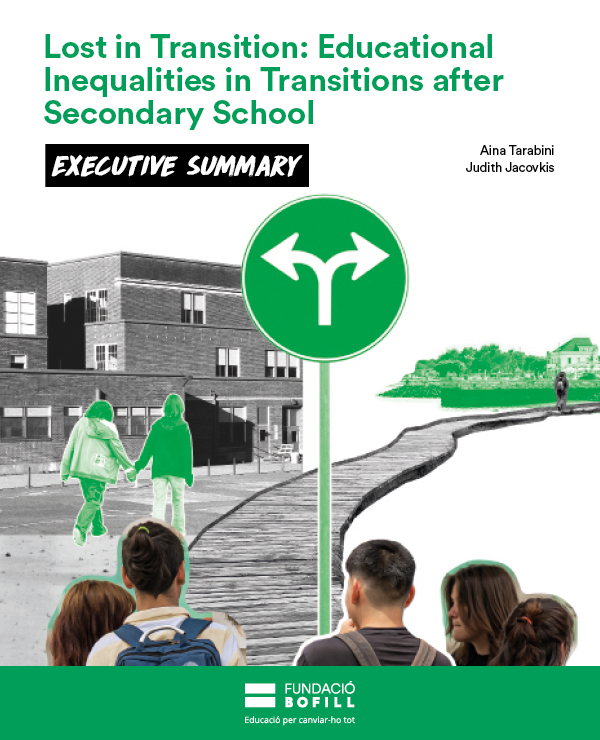
The transition from compulsory education (4th year of ESO) to post-compulsory education, such as Intermediate Vocational Training (CFGM) or Baccalaureate, is one of the most decisive moments in a student’s educational path. It is the first time that young people must face a “real choice” about their educational future and decide between an academic or professional pathway. This transition is one of the weakest links in the educational system, as it is the stage where most Early School Leaving (ESL) occurs.
Prioritising and improving this crucial educational moment, by supporting young people in their choices, is key to reducing school dropout. But how is this decision constructed? What options do they consider when deciding on their educational future?
Analysing educational transitions from the voices of young people is essential to address the depth of educational inequalities that are reproduced in this process, and to identify the main keys to effective educational policy. Their stories show that these choices are shaped by factors built up throughout their schooling and that influence how they imagine their future. At the same time, the absence of robust policies to support decision-making and facilitate the transition to post-compulsory education shapes the context in which young people make their choices.
They make their decisions unsupported, without enough elements to guide them, and influenced by accumulated experiences and stereotypes from their schooling. Often, it is a negative choice, made due to a lack of knowledge or as a result of a damaged school experience. The availability of post-compulsory education options is unequal and unfair, and structured in a way that prioritises the Baccalaureate as the default path. The guidance they receive is insufficient, biased, and late, making it difficult to ensure a successful transition.
The education system must be capable of offering the necessary support to ensure that all students — especially those in more vulnerable situations — have the knowledge, skills, experiences, and tools to make the best decisions throughout their educational journey, particularly at the point of transition from ESO to post-compulsory studies.